Fiber laser cutting job work in Bangalore
Shabari Metal Products has run sheet metal fabrication in Bengaluru since 2006, with fiber laser cutting in house. Send a file and we quote from it: outline, holes and cut-outs held to ±0.1mm with clean dross-free edges. Tell us where the work should stop, because bending, welding, finishing and assembly run under the same roof and parts can carry straight on from the laser. Prototype runs are quoted the same way as production orders.
What fiber laser cutting job work in Bangalore covers
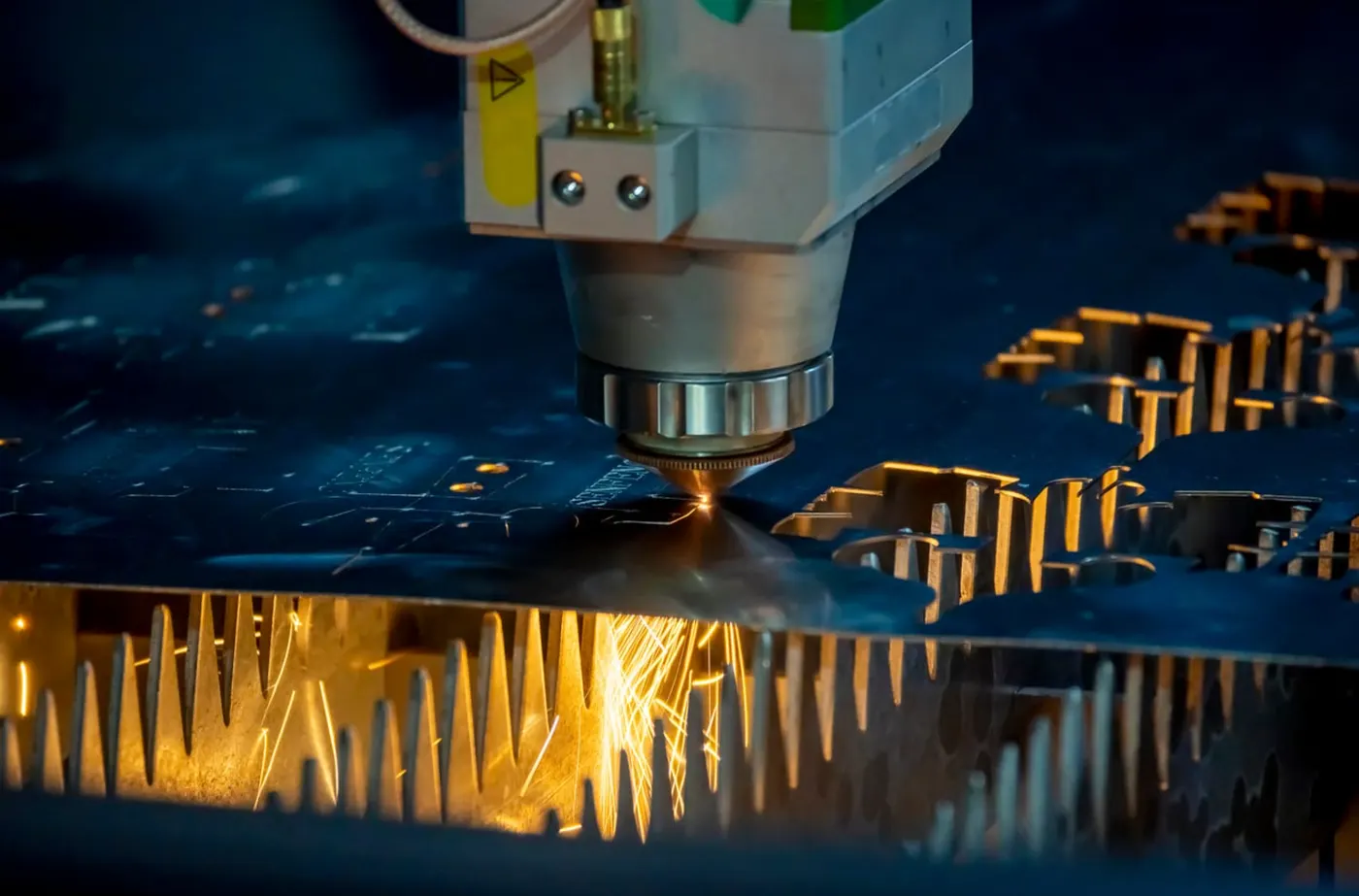
Fiber laser cutting runs in house and is normally the first operation on a flat part: outline, holes and cut-outs produced from one file, held to ±0.1mm with clean dross-free edges. Work of this kind generally suits shops that are loaded on their own machines, product companies with no cutting department of their own, and anyone who needs flat blanks ahead of their own bending line. Enquiries of every type are quoted the same way, so tell us where you want the work to stop and we will confirm the scope. CNC press brake bending, CNC punching, press work up to 500T, MIG, TIG, spot and laser welding, powder coating, zinc plating and brushed stainless finishing all run under the same roof, and a dedicated in-house assembly team builds up complete units rather than shipping loose panels, so a cut part can carry on without moving vendors. Single prototypes through to repeat high-volume contract manufacturing are handled.
- Quotations from your DXF, DWG, STEP or PDF, or from a sketch or a sample part
- Make-to-print parts taken through bending, welding, finishing and assembly
- Single prototypes through to repeat high-volume contract manufacturing, quoted the same way
- Sectors served: electrical, electronics, medical, industrial equipment, automation and robotics, commercial infrastructure
Holding ±0.1mm, and why the cut edge matters more than the number
The fiber laser holds ±0.1mm on cut features, with clean dross-free edges that need no secondary finishing before bending or welding. The edge is usually worth more to you than the tolerance figure. As general sheet metal practice, dross left on the underside of a cut has to be ground off before powder coating, because coating over a ragged edge is where chipping starts, and that grinding is manual, inconsistent and quietly eats the tolerance you paid for. A clean edge also welds better, with less spatter and fewer inclusions in the seam. Where a drawing asks for more than the cut edge itself, such as smooth deburred edges or fully deburred internals, that work is done in house. A separate in-house QC team runs dimensional inspection on every batch before dispatch, so parts have been measured against the drawing rather than only cut to it, and material can be supplied with mill test certificates on request.
File formats we accept and what makes a drawing quotable
Send DXF, DWG, STEP or PDF. If you only have a sketch or a sample part, we can work from that too and produce the drawing for you. Our engineering desk reviews drawings and responds within 24 business hours. What speeds a quotation up: closed profiles with no duplicate or overlapping lines, geometry drawn 1:1 in millimetres, bends shown either as a flat pattern with bend lines on their own layer or as a 3D model we unfold ourselves, and material grade plus gauge stated in the file or the covering email. Text and dimension entities left sitting in the cutting layer read as geometry and have to be stripped out. If you send a flat pattern for a formed part, say which bend allowance or K-factor it assumed, or leave the unfolding to us entirely. Mixing the two is where the classic complaint that the holes moved comes from. Files go to sales@shabarimetals.in, and sample parts can be brought to the works at No 197 & 196 Shabari, 1st Cross Road, Achappa Layout, Shrinketh Layout, Singapura, Bengaluru, Karnataka 560090, in the wider Abbigere locality.
- Accepted: DXF, DWG, STEP, PDF, a sketch, or a sample part
- State material grade and gauge alongside the file
- Keep dimensions and notes off the cutting layer
- Engineering desk response on drawings: within 24 business hours
When laser cutting beats CNC punching
What follows is general industry guidance rather than a description of any one shop's tooling. Turret punching is faster and cheaper per part when the geometry is mostly repeated standard tooling, such as round holes, slots and louvres, and when volume justifies the setup. Punching also forms features a laser cannot touch at all, among them dimples, countersinks, lances and card guides, though which of those a given shop can produce depends on the tooling it holds. Laser cutting wins on contoured or one-off profiles, tight internal corners, small holes relative to gauge, parts with many unique features that would each need their own tool, and prototype or low-volume work where amortising tooling makes no sense. Laser also gets relatively more attractive as gauge rises, since punching force and tool wear climb with thickness. A part carrying both a field of standard vents and a contoured outline often costs less split across the two processes than forced through either alone. We run laser cutting and CNC punching in house, with ventilation slots, cable entries and mounting patterns punched in a single setup for repeatable hole positions, so send the drawing and we will confirm which features can be tooled.
Design-for-manufacture rules that keep the cut price down
None of the following is specific to one shop. They are the standard sheet metal rules of thumb, and a file that respects them comes back with fewer engineering queries and a lower number on the quotation. Cost overruns on cut parts often have less to do with machine time than with rework, caused by features placed where the material cannot survive them, or by tolerances called out on features that never needed them.
- Keep hole-to-edge distance at least one material thickness, two if you can spare it; a thinner web than that distorts from cut heat
- Use an inside bend radius of at least one material thickness on mild steel; softer alloys crack at tight radii and high-tensile grades need more
- Add bend relief notches at least one thickness wide where a bend runs into an adjacent flange, or the corner tears
- Keep holes roughly 2.5 times thickness plus the bend radius clear of a bend line, otherwise they pull into ovals
- Dimension from a single datum instead of chaining feature to feature, so tolerance does not stack into the last hole
- Call out tight tolerance only where function needs it; a blanket tolerance on every feature raises price without improving the assembly
Choosing material before you send the file
CRCA is the default for indoor enclosures and anything being powder coated. It is the cheapest, it forms predictably, and the coating does the corrosion work; our own electrical distribution panel enclosures are formed and welded from 1.6 to 2mm CRCA. GI arrives with a zinc layer already on it, which suits unpainted parts, but that layer burns back at cut and weld edges. SS 304 covers most indoor stainless work; our stainless medical cabinets are built in SS 304 with radiused corners and soft-close drawer runners. SS 316 adds molybdenum and is the grade to specify for chloride exposure such as coastal air or chlorinated wash-down; it costs meaningfully more, so do not reach for it by reflex. Aluminium is chosen for weight and thermal work, copper mostly for busbar and thermal duty. On finishing, powder coat gives colour and a thicker barrier but demands proper deburring and pretreatment to adhere, while zinc plating leaves a thin sacrificial layer that keeps threads and close-fitting parts dimensionally usable.
- Materials worked in house: CRCA, hot-rolled mild steel, GI, SS 304, SS 316, aluminium alloys, copper sheet
- Tell us the grade and gauge with your enquiry and we will confirm the right process for the part
- Mill test certificates available on request
- Finishing in house: powder coating, zinc plating, brushed stainless
Common questions
Do you take fiber laser cutting job work in Bangalore?
Yes. Shabari Metal Products has run sheet metal fabrication in Bengaluru since 2006 and cuts on a fiber laser in house, working across the electrical, electronics, medical, industrial equipment, automation and robotics, and commercial infrastructure sectors. Send the drawing with the scope you need, whether that is cut parts or parts carried on through bending, welding, finishing and assembly, and the engineering desk will confirm it. Single prototypes through to repeat high-volume contract manufacturing are handled.
What tolerance and edge quality can I expect on laser-cut parts?
Fiber laser cutting at Shabari Metal Products holds ±0.1mm on cut features, with clean dross-free edges that need no secondary finishing before bending or welding. That matters most ahead of powder coating, where a ragged cut edge is where chipping starts. Every batch is dimensionally inspected by a separate in-house QC team before dispatch, and material can be supplied with mill test certificates on request. The ±0.1mm figure applies to laser cutting, not to other operations.
Which file formats do you accept for a laser cutting quotation?
Send DXF, DWG, STEP or PDF. If you only have a sketch or a sample part, we can work from that too and produce the drawing for you. Draw geometry 1:1 in millimetres with closed profiles, keep dimension text off the cutting layer, and state material grade and gauge with the file. Our engineering desk reviews drawings and responds within 24 business hours. Call +91 99453 80273 or email sales@shabarimetals.in.
Should my part be laser cut or CNC punched?
As general engineering guidance, punching is cheaper for repeated standard features such as round holes, slots and louvres at volume, and it is the only route to formed features like dimples and countersinks, subject to the tooling a shop holds. Laser cutting suits contoured profiles, tight internal corners, feature-heavy unique parts, thicker gauges and prototype quantities. Parts needing both often cost least when split across the two processes. We run both in house, so send the drawing and we will confirm which features can be tooled.
Plan your fabrication order
Prepare the specifications that help us review your drawings and quote accurately.
Send us your drawing
Send a DXF, DWG, STEP or PDF — or a sample part if there is no drawing. Our engineering desk reviews drawings and responds within 24 business hours.